
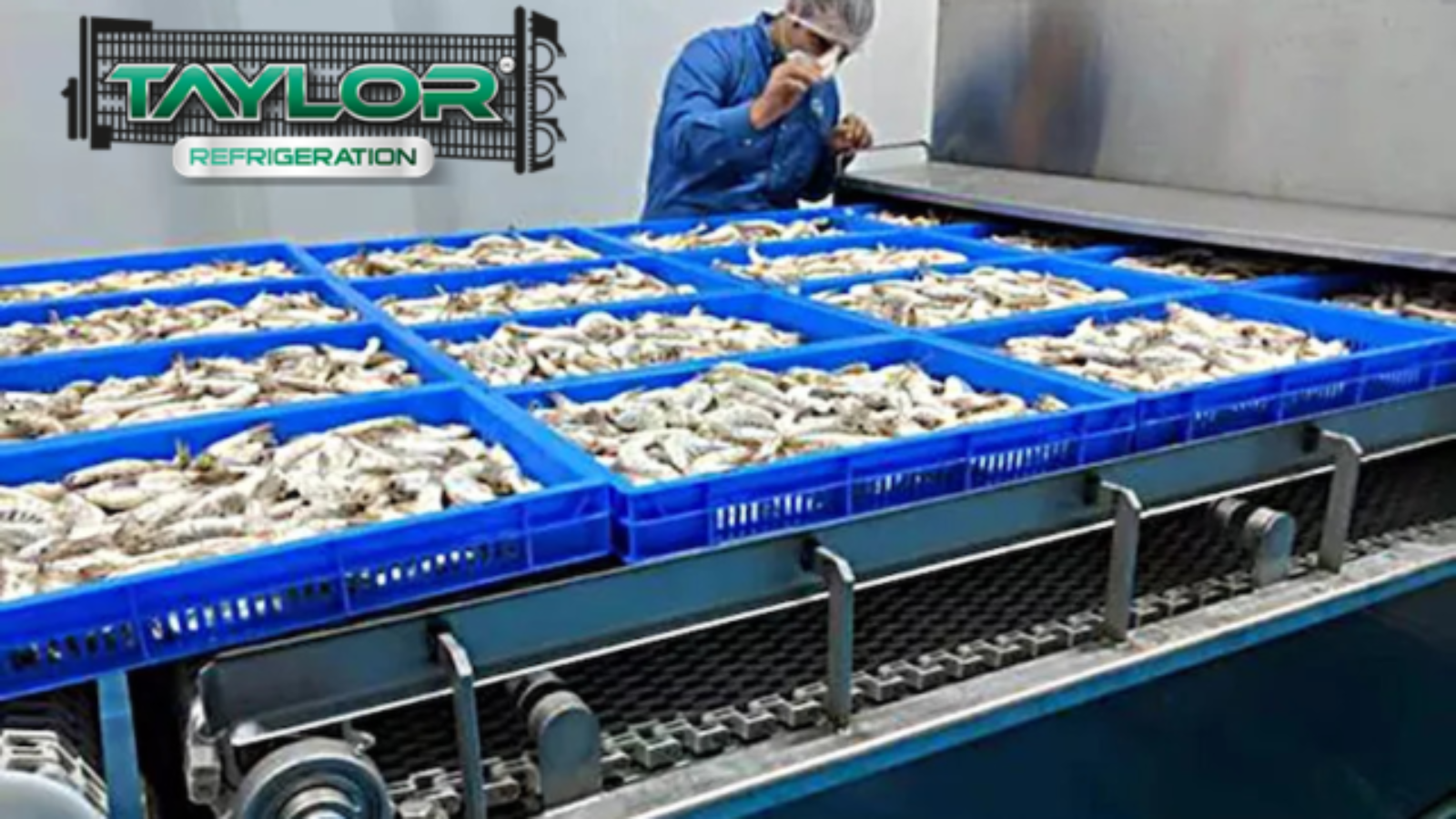
Industrial freezing is a crucial process in the food industry, ensuring the preservation of perishable goods while maintaining their quality and safety. Among the various freezing techniques available, brine freezing stands out as an effective and efficient method, particularly for industries that require rapid freezing of seafood, meat, and dairy products.
Brine freezers use a chilled saltwater solution to freeze products quickly and uniformly, making them an essential component in food processing and preservation. This guide explores the workings, types, applications, and advantages of industrial brine freezers, with a special focus on Taylor Refrigeration Australia’s solutions.
What is Brine Freezing?
Brine freezing is a method in which food products are submerged in or sprayed with a supercooled saltwater solution, known as brine. The high salinity of the solution allows it to remain liquid at subzero temperatures, enabling rapid and uniform freezing.
How Brine Freezing Differs from Other Freezing Methods
- Air Blast Freezing: This method uses cold air circulation to freeze products, but it is generally slower than brine freezing.
- Plate Freezing: This technique Involves pressing food between metal plates cooled by refrigerants, effective for flat or uniform items but less so for irregularly shaped products.
- Cryogenic Freezing: This method utilizes liquid nitrogen or carbon dioxide for ultra-rapid freezing, but this method is significantly more costly.
Compared to these methods, brine freezing provides a balance of speed, efficiency, and cost-effectiveness, making it ideal for certain food products.
Types of Industrial Brine Freezers
1. Static Brine Freezers
These are batch-based systems where products are submerged in brine tanks. They are typically used for:
- Small-scale operations
- Specialty food products
- Short production runs
2. Continuous Brine Freezers
Designed for large-scale food processing, these systems incorporate conveyor belts that move products through a brine solution for consistent and efficient freezing. Key benefits include:
- High throughput
- Automated operation
- Consistent product quality

3. Hybrid Brine Systems
These systems combine brine freezing with other freezing technologies (such as air blast or plate freezing) to achieve optimal freezing efficiency and product quality. Hybrid systems are particularly useful for:
- High-value seafood
- Customized freezing requirements
- Energy-efficient operations
Key Components and How They Work
1. Brine Tank and Solution
The brine tank holds the saltwater solution, which is typically maintained at precise salinity levels (often between 3-23% salt concentration) to achieve the desired freezing temperature. The composition and maintenance of brine are crucial to ensuring consistent performance.
2. Cooling System
Brine freezers rely on refrigeration units that extract heat from the brine solution, maintaining the low temperatures necessary for rapid freezing. Efficient heat exchange mechanisms, such as plate heat exchangers, enhance cooling efficiency.
3. Circulation System
To ensure uniform freezing, pumps and agitation mechanisms circulate the brine, preventing temperature stratification and promoting even cooling across all products.
4. Conveyor or Basket System
Depending on whether the freezer is static or continuous, products are either placed in baskets for batch freezing or moved through a conveyor system for streamlined operations.
Applications of Brine Freezing in Different Industries
1. Seafood Processing
Brine freezers are widely used for freezing seafood, such as shrimp, fish, and shellfish. These products require rapid freezing to maintain their natural texture, colour, and flavour while preventing dehydration. The quick-freezing process also reduces the formation of large ice crystals, which can damage the delicate flesh of seafood. Brine freezing is particularly advantageous for shrimp and shellfish, as the submersion method ensures even freezing, preventing clumping and making handling easier during packaging and distribution.
2. Meat Industry
Brine freezing is an effective method for preserving poultry, beef, and pork, as it reduces bacterial growth while retaining juiciness and texture. In meat processing, rapid freezing ensures that meat fibres do not break down excessively, maintaining the structural integrity of the product. Poultry, in particular, benefits from brine freezing, as it prevents freezer burn and retains moisture better than air-blast freezing. Additionally, frozen meat products processed through brine freezing exhibit improved thawing characteristics, making them more suitable for further processing and cooking.
3. Dairy Industry
Cheese, butter, and other dairy products benefit from brine freezing by maintaining consistency and extending shelf life. Soft cheeses, for instance, require careful freezing to prevent changes in texture and taste. Brine freezing is particularly effective for bulk butter storage, ensuring that large blocks of butter freeze evenly and retain their smooth texture when thawed. Dairy producers also use brine freezing for ice cream manufacturing, where rapid freezing is crucial for maintaining the desired creamy consistency.
4. Vegetables and Fruits
While less common, brine freezing is sometimes used for fruits and vegetables that require rapid freezing to lock in freshness and nutritional value. Certain fruits, such as berries, can be pre-treated with brine solutions to prevent enzymatic browning before final freezing. Vegetables like green beans, peas, and corn benefit from the fast-freezing capability of brine systems, ensuring they retain their vibrant colour, crisp texture, and essential nutrients. This method is particularly useful for processed vegetable blends used in ready-to-eat meals and frozen food products.
Taylor Refrigeration’s Industrial Brine Freezers
As a leading provider of industrial refrigeration solutions, Taylor Refrigeration Australia specializes in state-of-the-art brine freezing technology tailored to various industries.

Benefits of Taylor Refrigeration’s Brine Freezers
- Faster Freezing Times: Brine freezing is significantly quicker than air-based freezing methods, reducing processing time.
- Energy Efficiency and Cost-Effectiveness: Our advanced refrigeration systems optimize energy use, lowering operational costs.
- Better Product Quality: Brine freezing minimizes ice crystal formation, preserving food texture and moisture content.
- Scalability: Whether for small operations or large-scale production, our brine freezers are designed to accommodate varying production needs.
Brine Freezing as a Primary Industrial Method
Brine freezing remains an invaluable industrial freezing method, offering speed, efficiency, and superior product quality. Businesses seeking reliable and cost-effective freezing solutions can benefit greatly from this technology.
For industries looking to enhance their freezing capabilities, Taylor Refrigeration Australia provides cutting-edge industrial brine freezers tailored to diverse production needs. Contact us today to learn more about our solutions and how they can optimize your food processing operations.