
In today’s industrial landscape, sustainability is no longer optional—it is essential. Businesses across sectors are under increasing pressure to reduce energy consumption, cut emissions, and adopt environmentally responsible practices. For companies relying on refrigeration systems, compressors are a major area of opportunity.
Modern compressor technology has come a long way, offering not just improved performance but also meaningful gains in efficiency and environmental responsibility. In this article, we’ll explore how upgrading to modern compressors—especially high-efficiency Refcomp industrial compressors—can help your business meet its sustainability goals while improving reliability and reducing operational costs.
Thinking about upgrading your refrigeration system?
Talk to the experts at Taylor Refrigeration to explore compressor solutions that lower your energy use and support your sustainability targets.
📞 Contact us today for a free consultation.
The Environmental Impact of Industrial Compressors
Industrial compressors are at the heart of most refrigeration systems, but many facilities still rely on aging models that are inefficient by modern standards. These older systems often:
- Consume more electricity than necessary.
- Use outdated refrigerants with high global warming potential (GWP).
- Require frequent maintenance due to mechanical wear and tear.
- Struggle to meet current energy regulations and environmental compliance.
Left unchecked, these inefficiencies can significantly increase a business’s carbon footprint and utility expenses—two things that can hinder long-term sustainability and profitability.
How Modern Compressors Contribute to Sustainability
Modern industrial compressors are engineered with sustainability in mind. Unlike legacy models that operate at fixed speeds and lack intelligent controls, today’s compressors are designed to reduce energy usage, lower emissions, and extend equipment lifespan—all of which play a vital role in achieving sustainability goals. Here’s how:
1. Enhanced Energy Efficiency
Energy efficiency is one of the most impactful ways modern compressors support environmental goals. Compressors are typically the largest energy consumers in industrial refrigeration systems, so even marginal gains in efficiency can translate into significant savings over time.
Modern compressors offer:
- Variable Speed Drives (VSDs): These allow the compressor to adjust its speed based on cooling demand, rather than operating at full capacity at all times. This minimizes energy waste, especially in part-load conditions, which are common in most operations.
- Optimised Rotor and Valve Design: Manufacturers now use advanced computational modeling and precision machining to create components that reduce internal friction, leakage, and thermal losses, boosting mechanical efficiency.
- High-efficiency Motors and Bearings: Newer compressors incorporate premium-efficiency IE3 or IE4 motors and advanced bearing systems that reduce wear and energy loss over time.
Typical energy savings range between 20–40% when switching from older fixed-speed compressors to modern variable-speed models—making it one of the quickest ways to reduce both operational costs and carbon emissions.
2. Compatibility with Low-GWP and Natural Refrigerants
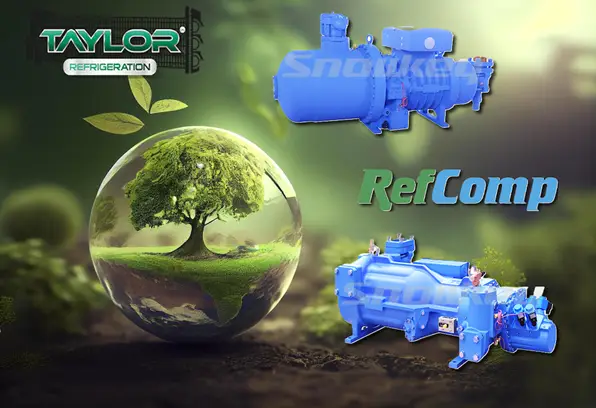
Modern compressors are designed to work seamlessly with low-GWP refrigerants, in line with evolving environmental regulations in Australia and globally.
- HFC Phase-down Compliance: As part of the Montreal Protocol Kigali Amendment, Australia is actively phasing down the use of high-GWP hydrofluorocarbons (HFCs). New compressors support refrigerants like R-1234yf, R-513A, and R-744 (CO₂), which significantly reduce global warming potential compared to older options like R-404A or R-134a.
- Natural Refrigerants: Many modern compressors can also operate with ammonia (NH₃) and carbon dioxide (CO₂)—natural refrigerants with ultra-low or zero GWP, offering both environmental and long-term cost advantages.
- Hermetically Sealed and Oil-Free Options: Available in select modern compressor designs, these help prevent refrigerant leaks and contamination—both major concerns with older compressor systems.
3. Smart Controls and Monitoring Capabilities
Digitalisation has transformed the way compressors are operated and maintained. Today’s models feature built-in intelligence that optimises system performance in real-time.
Key capabilities include:
- Automated Load Management: Compressors can dynamically adjust to match cooling demand, which prevents overuse and unnecessary energy consumption.
- Remote Monitoring and Diagnostics: Through integration with building management systems (BMS) or SCADA platforms, technicians can monitor compressor health, performance trends, and energy usage—reducing the need for manual inspections and allowing for predictive maintenance.
- System Integration: Modern compressors can easily integrate with high-level control systems to optimise entire refrigeration plant performance, not just the compressor unit. This holistic approach ensures that energy is used efficiently across the board.
4. Reduced Maintenance and Extended Equipment Lifespan
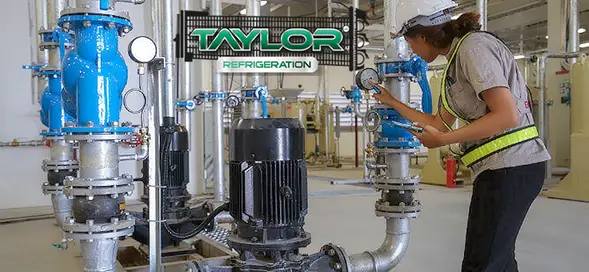
Sustainability isn’t just about energy and emissions—it’s also about reducing waste and making equipment last longer. Modern compressors are built with advanced materials, improved sealing technologies, and better lubrication systems that:
- Minimise mechanical wear and tear
- Extend maintenance intervals
- Reduce the risk of catastrophic failure
- Decrease the environmental footprint associated with frequent part replacements
By running more efficiently and breaking down less frequently, modern compressors help companies operate more sustainably while avoiding costly unplanned downtime.
Looking to modernise your refrigeration plant?
Taylor Refrigeration offers comprehensive system upgrades featuring energy-efficient, low-maintenance compressors from Refcomp.
📞 Speak with a refrigeration expert today.
Why It’s Time to Replace Outdated Compressors
Many businesses hold onto older compressors to avoid capital expenditure—but this short-term mindset often leads to higher long-term costs. Aging compressors:
- Are significantly less efficient,
- May no longer comply with environmental standards,
- Are more prone to mechanical failure,
- Require more frequent repairs and service.
The total cost of ownership (TCO) for outdated equipment can quickly exceed the investment required to upgrade. Replacing an inefficient compressor isn’t just a cost-saving move—it’s a proactive step toward meeting broader Environmental, Social, and Governance (ESG) objectives.
Why Choose Refcomp Industrial Compressors?
At Taylor Refrigeration, we recommend Refcomp compressors for industrial applications due to their unmatched reliability and sustainability performance. Refcomp compressors are known for:
- Exceptional energy efficiency, particularly in variable-load conditions.
- Compatibility with low-GWP refrigerants, including natural options.
- Robust construction suited to harsh Australian industrial environments.
- Advanced control systems that integrate seamlessly with modern refrigeration setups.
Whether you’re operating in food processing, cold storage, pharmaceuticals, or any other industry reliant on temperature control, Refcomp offers compressors that can help reduce energy bills and environmental impact—without compromising performance.
Partner with Taylor Refrigeration for a Sustainable Future
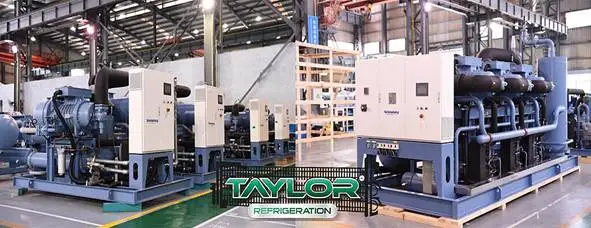
As a leading supplier of industrial refrigeration equipment and services across Australia, Taylor Refrigeration is committed to helping businesses transition to greener, more reliable systems. Our team can:
- Audit your existing refrigeration setup,
- Recommend and supply energy-efficient compressors like those from Refcomp,
- Handle full system upgrades and ongoing maintenance.
Start your journey toward energy-efficient refrigeration today.
Get in touch with Taylor Refrigeration for expert guidance, system assessments, and top-tier industrial compressor solutions.
📞 Contact Us today to speak with a refrigeration specialist.